Michael Rudd, who has quickly become an Americana music favorite, is continuing his rapid release schedule with another new album, “Midnight at Dawn,” his second album this year and the fourth in a series of five albums that work together as a collective whole. A prolific songwriter and noteworthy lyricist, Rudd has again gifted us with songs that matter and really say something. With more examination of and introspection on mental illness and mental health, coupled with stories of people searching for answers while looking for guidance, solace, support, or just someone to listen/hear them, the songs on “Midnight at Dawn” run the emotional gamut. At times moody and with taut, polished musicianship, the album envelops immediately. It’s another winner from the pen and mind of Rudd. We sat down with him recently to learn more about “Midnight at Dawn.”
Hi, Michael. Thanks for chatting with us today; it’s great to catch up with you again! You have a terrific new album out in September called “Midnight at Dawn.” This album is part of a collection of five albums that you started releasing a few years ago. This is album number four of five. When did you realize you had enough songs for five albums? Or did you realize as you went along that these five albums worked together cohesively on some levels?
I went on faith that I’d have all of the songs needed to complete the cycle. After the second album was done – and after I was diagnosed with cancer – life became compressed, and I felt a level of urgency that I’d never felt before. Not only did I write a lot of songs in a short amount of time, my songwriting seemed to change overnight.
Once the window for each album closed – meaning, after I sent charts and Mp3s to the band – I went right to the next window, even writing in one room while mixing was going on in another. My goal was to record a new album every six months or less. I no longer cared about industry standards regarding release and promotion. Given my uncertain future, it seemed meaningless, and still does. I had so many songs in my head that I wanted to capture as many as I could while I had the chance. Every writing window seemed different than the last, and the fifth brought a natural closure to the cycle. When I look back at the first album and trace what’s happened to my songwriting over the last two years, I don’t know how to say it, but I never could have predicted the path it would take.
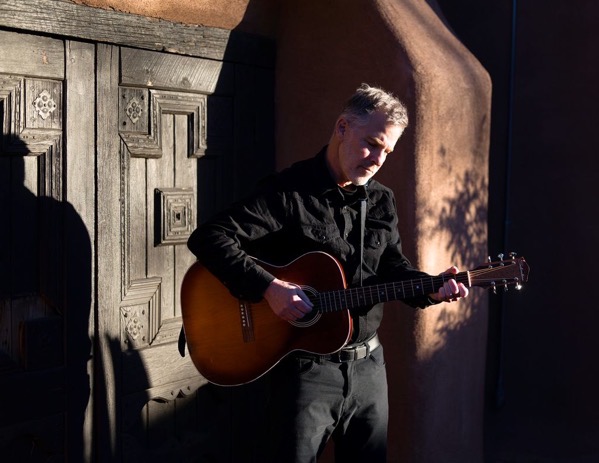
“Midnight at Dawn,” the title, seems to reference the things you think about in the middle of the night or the wee hours of the morning, that time when you can’t sleep and you can’t shut your brain off. Am I right about that? How did you land on this as the title of the collection and what does it mean to you?
Yes, that’s right. Many of the people in these songs can’t let go of their obsessions, even when the sun comes up. For some who are able to compartmentalize or rationalize or push intrusive thoughts aside, sunrise comes like a new world. But for others, a new day means little, and nothing changes in their minds, at least not easily. That’s the state of mind of many of those that I write about on this album. Some find a way forward. Others don’t.
The album also seems to have a vibe that references darkness and light. By that, I mean that there seem to be songs that are darker in tone, be it musically or lyrically, but there are also songs that have a bit more hope in them, or at least more musical lightness. Was this intentional as a reference to the title, or was it more of an organic result?
A little of both, I suppose. For example, I’ve been trying to write “Carry Me Home” for years, and it was only in the last couple of weeks before sessions began – and in the studio itself – that the song finally began to make sense to me. Like I do with every album, I choose more songs than I want to record and then narrow down the list in the last few days or weeks. I knew that “Carry Me Home” needed to be on the final list to counter some very heavy songs and provide a little bit of peace in the chaos. I didn’t want to overwhelm listeners. Once we went through the first take, I knew for sure that the song would make the album. It’s probably the most spiritual song I’ve recorded, and another kind of vibe that comes at sunrise if you’re very lucky.
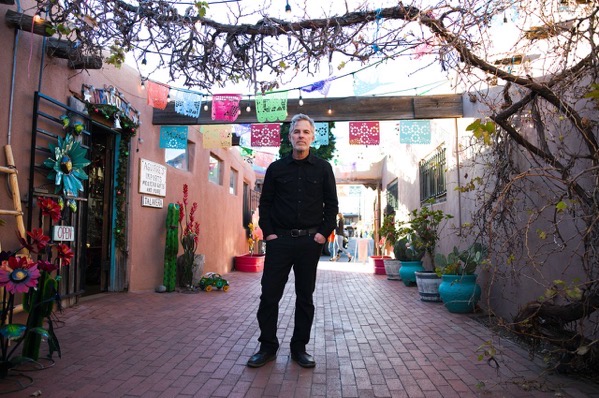
One of the songs on your new album, and it’s one of the singles, “Chained to a Stone,” is really great and stood out to me. What can you tell us about that song? What inspired you to record it? What is the story behind it and what did you intend for its message to be?
“Chained to a Stone” came out of my own lifelong experiences with mental health struggles and from the experiences of many people I’ve known through the years. The thoughts and images and conversations keep coming and circling in your mind, and all you can do is keep dragging that stone up the hill to try to get through the day. There’s no message there, but I’m guessing a lot of listeners will recognize the intense and unrelenting challenge that the character faces day and night.
How did this song, in particular, come together with the people you worked with in the studio?
Hard to remember exactly, but I think it didn’t take too long to feel like we had a song. We found the right groove and energy almost immediately. It needed a live feel to capture the anxiety and desperation of the character, and I think we got there.
Overall, how was the recording process? Talk us through a “typical” day in the studio working on the album.
We start late morning and work until the evening or whenever we’re collectively too exhausted to find the emotion needed for the next song. Just like listening, playing music demands an emotional and sometimes spiritual commitment, so several hours of it takes a lot out of you. We mostly record together in the main room at Frogville Studios in Santa Fe, New Mexico, and we use an isolation room when we don’t want certain sounds to bleed into the mics or suspect that we’ll need overdubs or layering, depending on the nature of the song. We usually break once or twice to go get coffee down the road or eat at a New Mexican restaurant, and we do a lot of listening in the sound room when we think we’ve nailed a take. Sessions are always long and very focused, just the way I like them. We enjoy being around each other, which helps a lot.
And also, overall, did the album end up sounding like you imagined, or did it take a different path in the studio?
The general sound of the album is what I expected and wanted, but some songs changed because of what everyone brought to them. That’s normal and expected. I like to work in an open, creative environment, so all ideas are welcome. It’s all about the song.
You seem to have worked with a lot of the same people across multiple albums. Who are the folks who helped this album come to life? And did having worked together more than once help you to develop a musical shorthand or ease with them? If so, any examples of this that you can share?
Pat Malone, the lead guitarist, and Mark Clark, the drummer, have been with me since the first album. Brant Leeper has played various keyboards since the second album, and Kevin Zoernig, another talented keyboardist, made his first contributions on this album – he also played on several songs on the fifth album of the cycle, which comes out next spring. We’ve recorded a lot of songs over the last couple of years – 54, to be precise – so at this point the collective habits and rituals and creative processes of the studio have been well-rehearsed. We work really well together, and in my mind that cohesion comes out on the recordings. Getting “Carry Me Home” right is a case in point. Even though the song was feeling okay to me a couple of days before sessions started, when it came time to record the song, I suddenly was pretty sure it wouldn’t work at all. But once we started playing, I knew I was completely wrong. They all understood exactly what the song needed, and the experience of recording matched the ideas in the lyrics. My favorite two minutes in the studio was our live recording of the end of it, a two-minute instrumental section. I’m grateful for the experience and the memory.
Your music has a real depth to it, lyrically, that speaks to life experiences. How do you think the many chapters in your life have factored into your music? What things did your past teach you that you’ve been able to apply to songwriting and music making?
I appreciate the question, but the answer is actually the other way around: songwriting has allowed me some insight into my life and a deeper understanding of those I’ve known and some aspects of the wider world. I think I subconsciously enter into the writing of each song with an open question. In my tradition, questions are more important than answers. In a way, they are the answers. Songwriting has also taught me empathy and how to be less of an introvert. Whatever words you attach to your voice, singing is always emotional and a kind of bridge to the minds and hearts of other people. It’s probably the only way I feel comfortable expressing what I feel.
What do you hope this album conveys to those who listen to it?
I don’t have an endgame when I write a song. I write and record them and hope that a listener gets something from listening. From a little more analytical perspective, feeling despair or hopelessness or loneliness is a natural condition of being human, and to move through them requires some gazing into the darkness. To answer your previous question more directly: after decades of a very intense life, I’ve learned to be resilient, or found in retrospect that I was resilient, and the next day – and sometimes the next moment – always has the possibility of turning out to be a little lighter and a little more peaceful, at least for a while. Alcohol and drugs don’t help – I know, I’ve tried. These songs are about people staring into the darkness and sometimes finding peace on the other side. If I’m intentionally conveying anything, it’s that all of us share this challenge.