Dallas, TX-based hyphenate (singer-songwriter-producer) Salim Nourallah just released a stellar new album, Nourallah, at the dawn of 2026 (the album was unleashed via Bandcamp on New Year’s Day). An alt-rock-pop confection of the highest order, the album is an absolute delight, anchored by Nourallah’s sublime songwriting. Packed with philosophical lyrical questions and enough pop shimmer (hello, Beatles inspiration!) to lift the songs in a compelling way, Nourallah is perhaps this artist at his songwriting best. We sat down with him recently to get the story on this new album, the creative process behind it, and what else is coming down the pipeline from this tremendous talent.
Hi, Salim! You have an amazing new album that you surprise-released on New Year’s Day called Nourallah. Please tell us about the album in a big-picture sort of way.
Well, the oldest song on the record, “Born With a Broken Heart,” was written almost eight years ago. So even though I “spontaneously” released Nourallah on New Year’s Day, this album has actually been in the works for quite some time. The bulk of the songs were written in the middle of the pandemic — which shows you how fast I’m working here!
I ended up recording about 28 songs all in all with my friend Billy Harvey. It was just the two of us playing all the instruments. Billy played the drums and all the electric guitars, and we split the bass duties. Once the recordings were complete, I had a pretty difficult time deciding which songs would make the album. I didn’t want it to feel like a disparate collection of songs.
“Born With a Broken Heart” was the final inclusion in the Nourallah album sequence. I hadn’t initially considered it because another version of the song had previously come out on my Jesus of Sad EP. It felt like a breakthrough when I realized it would be the perfect lead track for side two. Since my parents are at the center of that song, I thought it set up “The Mustache Years” nicely.
Speaking of that song, “The Mustache Years,” really stood out to me. What can you tell us about it? What inspired you to write it?
It’s nice to hear you liked this one, because I was of the opinion that this song might confuse some people. It’s ultimately kind of weird and rowdy!
The backstory starts before my father passed away in 2019. We had a standing weekly lunch date at a Mediterranean buffet, and over the course of almost two years, I recorded numerous conversations with him. It was mainly me getting him to tell stories from his past. He had an incredible memory and could recall so many things, even down to details of what a person was wearing 50 years ago.
After he died and the pandemic hit, I couldn’t really work or play gigs for a while. I started writing some essays about my family and then moved into creating a podcast pilot using some of the audio clips I had of my father. Long story short, I put a ton of time and effort into it and pitched it to iHeartRadio. iHeart’s Jack O’Brien rejected it on the grounds that they didn’t think “The Mustache Years” podcast could “find a big enough audience.” Ultimately, the decidedly Anglo-Saxon powers that be thought it was too “niche” and too “ethnic” to connect with their listeners.
So the song spun out from the podcast title that my partner, Gaines, had come up with. She’s great at generating spontaneous creative ideas, and a lot of my song titles over the past decade have come from us riffing together. Like the podcast, I’m just the narrator in this song. It incorporates images and stories from my dad’s life in 1970s El Paso, when he and a bunch of Arabic expats were rolling like they were in a West Texas version of “The Sopranos.”
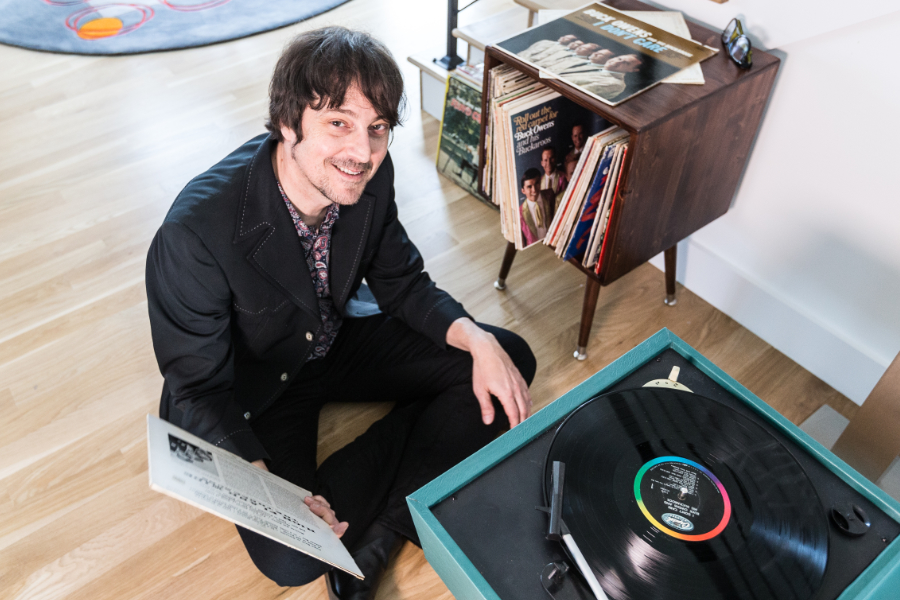
What was it like recording this album?
It was mainly tracked over multiple trips Billy Harvey made to my recording studio in Dallas. “Another Hateful Day” was cut last in Billy’s Nashville studio, The Shed. Billy and I have such a solid, peaceful friendship. It was nothing but good times, even when we were working on something challenging. He’s not only one of my favorite songwriters but also one of the coolest guitar players I’ve ever heard. His sense of melody is next level, and he also has a knack for jagged aggression on the guitar that keeps his playing from ever being antiseptic.
Any great studio stories?
One story has to do with recording “The Mustache Years.” One morning, I got to the studio earlier than everyone else and started scrawling words on an envelope while I waited. They just started pouring out. I think the first line was, “Never trust a man in a leisure suit, never trust a man with a gun in his boot.”
I got excited and raced home to put the words into my computer so I could move them around and print them (I only live four blocks from the studio). When I got back, Billy still hadn’t arrived, so I picked up a guitar and started singing the words I’d printed out. By the time Billy walked in the door, I basically had a sketch of the song.
I excitedly played it for him and, instead of suggesting we record it later, he said, “You should put it down right now!” I hadn’t had time to think much about the structure or analyze the lyrics — I’m usually pretty methodical about both. I ended up cutting the vocal and acoustic guitar track we built the song from on the second live take. It was tons of fun and very spontaneous, and I think it contributed greatly to the energy of the final recording.
What do you hope this album’s message is for listeners?
That’s a tricky question, because there isn’t an overarching “message.” Maybe I’m just asking listeners to ask themselves questions. I touch on a lot of things I’ve been contemplating over the years — facing our impermanence, questioning why we live in a world where so many people commit atrocities and destroy the planet, questioning how there could be a God actively participating in all of this when the world is so brutally cruel and unjust. Questions, questions, questions. So yeah — this record is full of lots of light, disposable pop songs!
The album title seems obvious since it’s your last name — but how and why did
you choose it?
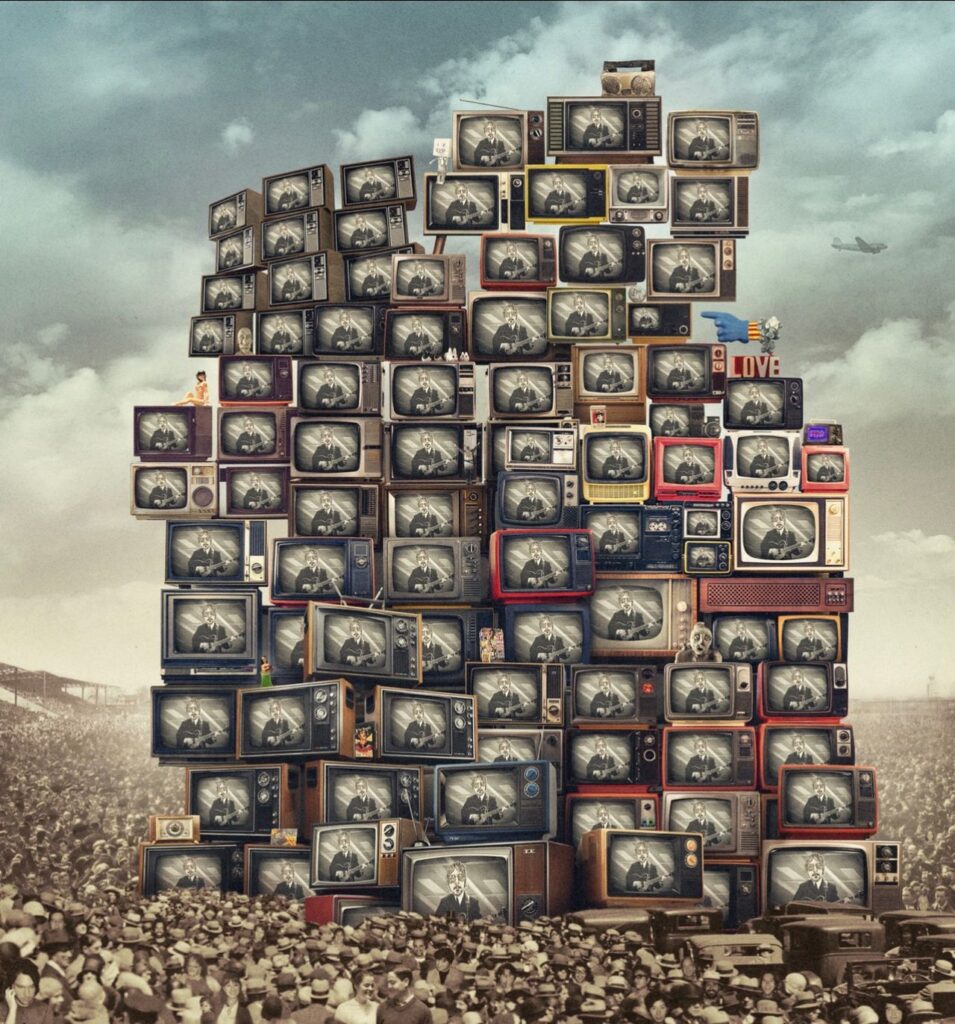
I’m happy it seems obvious to you, because it took me forever to arrive at it. I must have ruminated on the album title for at least half a year. One reason it was so difficult is that Jeff Caudill had designed a spectacular work of art for the album cover. I wanted a title that supported his artwork rather than distracted from it. My loved ones in the “crowd” also factored into the decision. Young Fayez and Karen, my parents, are front and center, and several close friends who are no longer alive are pictured as well — Ginger Reeder, Bucks Burnett, Carter Albrecht, Trey Johnson, and Owen Obel.
It wasn’t until I realized that God, the Bible, the Koran, Buddha, the Pope, and a nihilist all appear at various points in these songs that I finally understood Nourallah was the perfect title. Nour means light in Arabic, and Allah is God.
How do you feel you’ve changed as an artist, writer, and creative person over the
years?
I definitely haven’t gotten any faster at deliberating on the release of new music — I still move very slowly, and I’m trying to improve in that arena. I think my partner has helped me become a better lyricist. She’s a brutally tough editor, so there’s no coddling of songs like precious babies. It’s been pretty awesome having someone who isn’t a “fan,” per se, give critical feedback.
I also think the A Break in the Battleproject I’m in has helped me become a better singer. ABITB is an acoustic covers project with two friends, Chris Holt and Paul Averitt, that’s been ongoing since 2017. It’s helped me stop cringing when I listen to my own voice.
Were there any artists who inspired what you did on this album, lyrically or musically?
The Beatles’ production aesthetic is always operating in the background of everything I do, but there wasn’t any particular artist that inspired me while making this record. Once you’ve been at this as long as I have, you begin to follow a path dictated by your previous work — either reacting against it or leaning into things you’ve done and want to expand.
In the case of Nourallah, I wanted this record to be more playful lyrically, almost irreverent at times. There’s a “chaos” energy at the center of it that I hadn’t explored since my 2015 release, Skeleton Closet.
How did it feel to release this album into the world?
I feel a lot better about the record than I feel about the world at large. One reason I released it on New Year’s Day was to give the people around me something to enjoy while they were being pummeled by terrible and disturbing news. It’s been overwhelming for so many people, including me.
I feel like the best thing I can contribute to the world — especially right now — is to give people songs. That’s why I believe I’m here, and that’s what I’ve been focusing on.
What was the most exciting thing that happened for you in the past year?
Reconnecting with my brother, Faris, and releasing our 25-five-year-old debut, Nourallah Brothers,on vinyl. We’ve also been collaborating again for the first time in two decades and semi-miraculously made a new record.
What are you most looking forward to in 2026?
I’m looking forward to five vinyl releases this year — yes, five! I’m putting out another solo record called Close as a Starin April, followed by the Nourallah Brothers swan song, Calling Manila. The Disappearing Act also has a new record coming out called Proof of Existence. In the fall, I hope to put out my fourth CD, Constellation, on vinyl for the first time.
Any tour plans? Where can fans see you on the road?No tour plans at the moment. I’ve mainly been playing small shows in the listening room next door to my recording studio, called Galactic Headquarters. The Nourallahalbum release show is happening there on February 28th.
Website: http://salimnourallah.com/
Facebook: https://www.facebook.com/salimnourallah/
Twitter: https://twitter.com/salimnourallah
Instagram: https://www.instagram.com/salimnourallah/
Bandcamp: https://salimfnourallah.bandcamp.com/album/nourallah