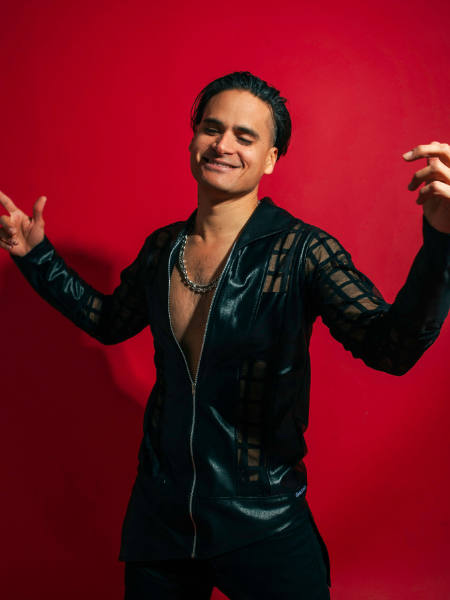
With the 2026 JUNO Awards introducing the Latin Music Recording of the Year category for the first time, Cuban-Canadian artist Andy Rubal steps into the spotlight as a debut nominee. Born in Santiago de Cuba and now based in Montréal, Rubal has carved out a singular sound that fuses the heart of salsa with jazz sophistication and pop accessibility. His second full-length album, Baila y Confía (Dance and Trust), released in November 2025, celebrates his roots while exploring themes of self-discovery, romance, and faith. We caught up with Andy to talk about his JUNO nomination, musical journey, and what’s next.
Congratulations on your first JUNO nomination and on being part of the inaugural Latin Music Recording of the Year category. What does this milestone mean to you personally and professionally?
- I woke up one morning and my manager, Michael Litresits, called me with the news that Baila y Confía had been nominated in this new Latin music category. Honestly, it took me several hours—and even the first three days—to fully process such incredible news. It represents the result of many years of hard work and sacrifice. We have been striving to bring salsa, in my case with original compositions, into the hearts and preferences of audiences in Canada. This new category is also a dream come true, because it creates a real space for Latin music within the wide musical landscape of this country. That, for me, is a victory. I thank God for it.
You were born in Santiago de Cuba and are now based in Montréal. How have those two places shaped your musical identity and the sound you’re creating today?
- Santiago de Cuba has been the foundation of my sound throughout my entire musical journey. I come from the tradition of the Pilón rhythm crystallized by Pacho Alonso, the Franco-Haitian cultural heritage of the region, and above all the son and trova traditions of Santiago, which were pioneers of the bolero. Montreal has been essential in shaping my new sonic direction. For example, my song Dímelo Nawe blends country and traditional Québécois music with salsa and the son style of Miguel Matamoros. That combination reflects my life between these two worlds.
Q) Your music blends salsa, jazz sophistication, and pop sensibility. When you’re writing or arranging, how do you strike a balance between honouring tradition and pushing your sound forward?
- This is a fundamental question, because my soul is rooted in salsa. But music is an ocean of possibilities—how could we not allow ourselves to explore it fully? I have always been very respectful of tradition, but times change and we must modernize. In my case, I do this while staying grounded in the structures of son and other Cuban and Latin genres. At the same time, I get bored if I don’t bring something new, even if it seems small. I always want to add a different element.
Q) Baila y Confía (Dance and Trust) is a deeply personal album rooted in themes of self-discovery, romance, and faith. What story were you most excited—or nervous—to tell on this record?
- This is an important question, and I’ll take a moment to answer. The song Déjame Vivir is a cry from my soul during a difficult time, when I felt spiritually exhausted after a very painful emotional breakup. But Baila y Confía is like the remedy to that pain. This song reflects the loss of dear friends who left unexpectedly, such as the bassist from my first band in Cuba, Dayron Zayas, who passed away at just 28. It also reflects other people who were important in my life, including a colleague who took her own life, and another friend who lost his son. All these experiences accumulated over time. At the same time, I meet audience members who become like family. They sometimes share their struggles with me, but they keep moving forward, dancing with faith in the future. In my own life, I found happiness in God, my children, my family and friends, and in making people dance.
Salsa has clearly been a lifelong love for you. What keeps drawing you back to the genre, and how do you make it feel fresh for modern audiences?
- Salsa is my passion, just like the music of Johann Sebastian Bach and the classical masters. Seeing smiles and healthy people dancing—because dancing is health—and knowing that this happens through my music… there are no words. I am deeply grateful for the sound and legacy of the great salsa artists who came before us.
You’ve shared stages and collaborated with Cuban legends like Raúl Paz, Waldo Mendoza, and Orlando “Maraca” Valle. What lessons or defining moments from working with those artists continue to influence you?
- Working with artists in Cuba opened the door for me to learn how to command a stage and how to build an honest relationship with the audience through our art. With Waldo, for example, I learned sensitivity and exploration within the Cuban-style ballad. From Maraca, I learned discipline and professionalism—from ironing your shirt to playing every note with excellence, as well as Afro-Cuban jazz and traditional Cuban genres. Raúl Paz showed me the power of simplicity without losing excellence. I also explored a symphonic universe while adapting his pop music to be performed by a string quartet from the Paris Regional Symphony in France in Métis in May 2013, and later for a full symphony orchestra, with Alexis Cárdenas as concertmaster.
From being a finalist on Québec’s Piano Public to performing at major festivals like the Montreal International Jazz Festival and SunFest, how have live performances shaped your evolution as an artist?
- Piano Public was a beautiful experience that I unfortunately had to leave due to international commitments. The Montreal International Jazz Festival has been my greatest achievement since moving to Montreal, especially because of the audience’s incredible response. SunFest is also a very special festival, particularly because of the support and warmth of its director, Alfredo Caxaj. Every performance is a lesson and part of an ongoing evolution. Each audience is different, with its own energy, and my greatest accomplishment is being able to unite everyone in that moment into one heartbeat when I perform.
With a JUNO nomination, international touring experience, and increased visibility for Latin music in Canada, what do you hope the next chapter looks like for Andy Rubal?
- I believe many blessings are still ahead, and I feel calm and confident about that. I will continue making music and working hard, but with faith. This nomination opens new doors, and together with my team at Moonsun Musik, we will keep moving forward with love.
____________________________________________
As Andy Rubal celebrates a career-defining JUNO nomination, Baila y Confía stands as both a reflection of where he comes from and a confident step toward where he’s headed. Blending tradition with innovation and trust with fearlessness, Rubal’s journey mirrors the very spirit of the album—inviting listeners to dance, believe, and move forward with heart.