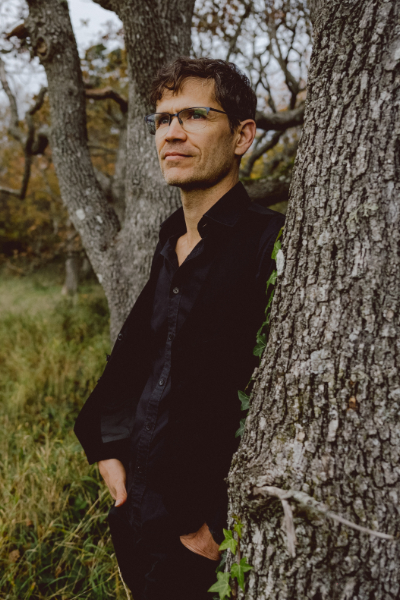
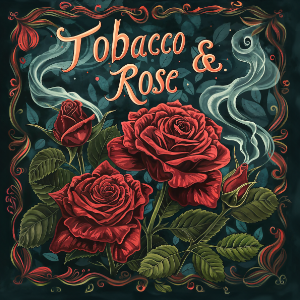
A 30-year veteran of the Canadian music scene, Richard Moody has toured the world with such luminaries as Deva Premal, Miten, The Wailin’ Jennys, Steven Fearing, and The Bills. Tobacco & Rose – both his band name and the album name – is a collection of songs inspired in part by experience with psychedelic and medicinal plants from the Amazon and the Pacific Northwest. Says Moody of the release: “Like most artists, I love to create, express, and showcase that which I can conceive, but I also want to fulfill a long-held desire to blend music and spirituality, and to share that with listeners that are interested in such things. I also want to honor the plant and animal worlds, and, hopefully, in some way to encourage healing, happiness, kindness, and inclusiveness… all the good things.”
An album that has nature at the core of every note, “Tobacco & Rose” floats and quietly soars, bringing solace and relaxation in an increasingly difficult world. With an album that is a love letter to the natural world, Moody has found the perfect space for his enlightened and uplifting message within these nine tracks. It’s a sublime, calming listen.
We sat down with Moody recently to get the low-down on this impressive album.
You have a terrific new album that just came out in April called “Tobacco & Rose.” How did these songs come together and what broad strokes can you tell us about the collection?
Well, these songs all started after I got the opportunity to work with a plant medicine in Peru called ayahuasca. The writing ran parallel to a healing journey I’ve been on for the last few years. I’m a long-time professional string-player/side-musician, but I hadn’t written any songs in years, until, all of sudden, they started flowing out of me. So they all have a kind of intimate, often introspective, spiritual vibe. I’m talking about reconnecting with nature, reconnecting with the body, reconnecting with the heart.
One of the songs on your new album, “Tara,” is really great and stood out to me. What can you tell us about that song? What inspired you to record this song?
It started out as a love song to a crush that didn’t last very long. But I have a beginner interest in Buddhism, and “Tara” is one of the Buddhist “embodiments” that a practitioner can meditate on in order to practice right thought, word, and action. So I reworked the song for a different purpose, a different kind of love. The song is loosely dedicated to Tara, to Buddhism, and is a reminder to myself to behave well, ha ha!
What was it like recording this album? What was the vibe in the studio overall, and how did this song, in particular, come together?
It was a long process, way longer than I expected. I knew I had written songs worthy of presenting to the world, but it took me ages to get good performances on recording: multiple sessions with different people, multiple studios. But, eventually, I ended up setting up microphones in my own space, trying to capture the live interplay of my own voice and guitar, and then adding other players/instruments later. It was also a process of becoming a better guitarist and singer. Frankly, my first attempts were quite revealing, ha ha!
What do you hope this album conveys to those who listen to it?
“May all beings be happy, may all beings be free,” is what the Buddhists say, so I’d second that. I would hope people recognize and are inspired by themes like reconnection to our true somatic selves, deepening of awareness, rewilding, and reconnection to nature.
The album title, and the name of the band, is interesting. What do you think the phrase means and how did you choose it?
I got to take part in these plant medicine ceremonies in various places like Costa Rica and Peru. Those two plants were used a lot. They are both considered master plants, containing teachings and healing potential. They have many uses actually, according to many indigenous traditions. But mainly, they were two of the predominant smells in the ceremony space, and I thought the name sounded really cool, ha ha. I realize tobacco gets a bad rap, and for good reason, as it is mostly misused, and, like many plants, is considered to have a dark side.
If you look back over your career, you probably feel like quite a different performer now than when you began for a number of reasons – life experience, industry experience, studio and performing experience all factoring into that. You talked about your experiences with plant medicine. Why would you say that’s where you got your biggest inspiration from recently?
It was the experience of going deep, exploring awareness practices, taking part in these ceremony opportunities, letting inspiration come to me almost magically, and describing what I see. I’m inspired by what’s good in the world: healing, art-making, songs, nature, community, kindness.
Songwriting and recording music can be a really personal endeavor, yet when you release a song or an album or an EP, you share the music with so many people. How does this make you feel, and is it difficult to share songs widely like that? Have you gotten feedback from anyone who has connected with your music or had a song impact them in a deep and meaningful way?
It’s a bit terrifying, honestly. When you’re recording, you get to be your own judge, and redo things as many times as you have money, time, or patience for. But once it’s out there, it’s out of your control. So it’s a great practice in non-attachment, and self-loving, actually. And yes, it’s early days, but I’ve had some beautiful feedback from people who identify with the meaning of the songs, the three singles that have been released so far.
What has been the most exciting thing to happen for you in the past year? What are you most looking forward to for the rest of 2025?
Probably the release itself: I’ve been working on this for six years! I’m looking forward to paying the songs live.
Got any tour plans? Where can fans see you on the road?
Yes! I’m playing in Canada, starting in April and into July. I hope this is just the beginning.