Sometimes music finds you when you need it most, when the message will have the biggest impact or move you beyond description. It comes softly, unexpected in its arrival, but impactful in ways that only time and repeat listens will reveal. Evergreen music to carry with you as you continue on, songs that offer guidance and solace. “You are not alone,” they whisper. That is the kind of album Candace Hastings has made with Soft Place to Land, a collection of songs that delivers life truths and clarity that will resonate for everyone. Songs about finding your place, finding your people, leaving and coming back, learning and growing. All of it is cloaked in twangy Americana, sometimes gliding down summer-hot asphalt, other times shuddering down dusty, gritty backroads. It’s exhilarating and beguiling and restorative in its storytelling arcs. It is the soft place to land of its title, and we took a little time to learn more about it recently from Hastings herself.
Hi, Candace! You have an amazing new album out in June calledSoft Place to Land.What is the story behind this album and how did it come together?
Soft Place to Land came together as a collection of songs about longing, leaving, forgiving, and belonging. The songs are deeply personal, rooted in place, and some reach back into family, history, and collective memory. But as I started gathering them together, I realized they were all asking the same question: Where do we go when we need somewhere safe to put down what we’ve been carrying?
One of the songs on your new album, “As Eagles Fly,” is wonderful and stood out to me. What can you tell us about that song? What inspired you to write the song?
“As Eagles Fly” is intensely autobiographical, but it also places my own story as a Potawatomi woman inside a much longer history of intergenerational trauma experienced by Indigenous peoples at the hands of the United States government. I can only speak from my own lived experience, but the song came from a profound shift in how I understood that lived experience.
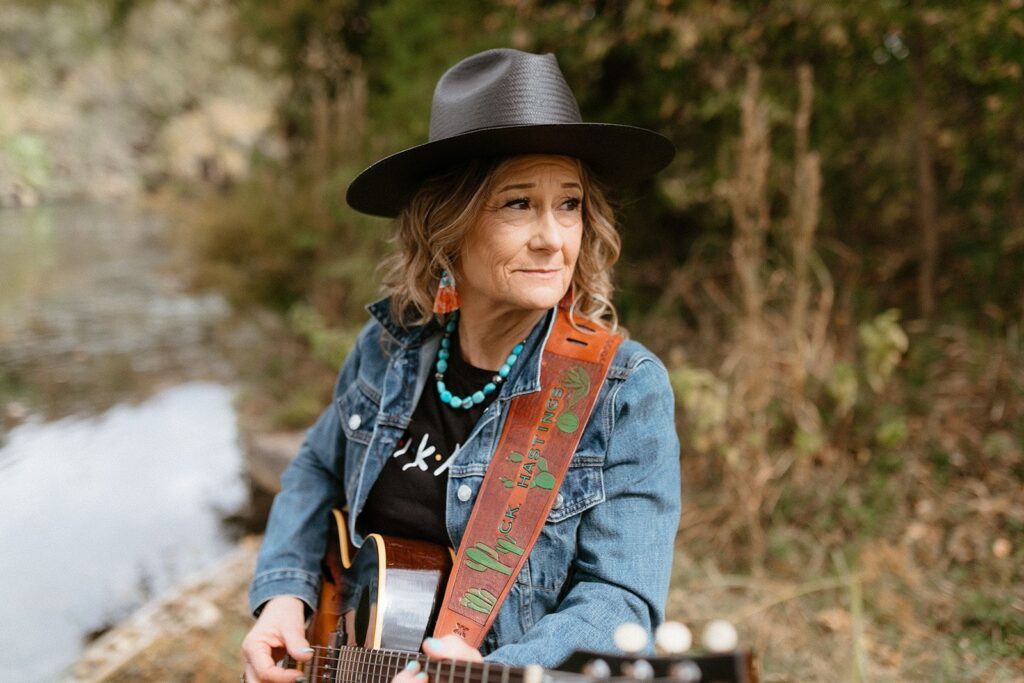
For a long time, I understood what happened to me and to my mother only through the lens of individual and immediate family circumstances. Those things are real, but they are not acontextual. As I learned more about my tribal history, I learned that forced removal and separation were used as tools of assimilation in an attempt to “kill the Indian, save the man.”
But that’s not the end of the story. We believe our generation is part of the Seventh Fire, a time when the people return to the culture and rebuild. So while “As Eagles Fly” is deeply autobiographical, it is also a message tojagenagenan [all my relations]: We will heal, we will bring our ways back, and we will rise.
What was it like recording this album? Any great studio stories?
One of my favorite parts of the process was hearing what other musicians brought to the songs. Sometimes a small musical choice, like a steel guitar phrase, or a fiddle line can open up a song in a way you never expected. It’s a beautiful thing to hear people you admire listen closely to your work and then answer it musically.
Who did you work with on the album and how did they help shape what it became?
I worked with Lloyd Maines and Pat Manske, and since I’m mostly a solo artist, that collaboration gave me the opportunity to rediscover the songs as we added texture and depth. When we decided to add fiddle to a few tracks, Lloyd brought in renowned fiddle player Dennis Ludiker. The way Dennis’s fiddle dances with Lloyd’s pedal steel on “I Was That Woman” and “It’s Too Damn Hot” made me think of an old open-air Texas dance hall on a spring Saturday night. Those parts brought warmth, movement, and a real sense of place to the album that says, “Let’s dance, y’all.”
What do you hope this album’s message is to those who listen to it?
I hope listeners come away feeling that even after loss, after disappointment, after loneliness, after the things that shape us and sometimes break us, we can find a soft place to land.
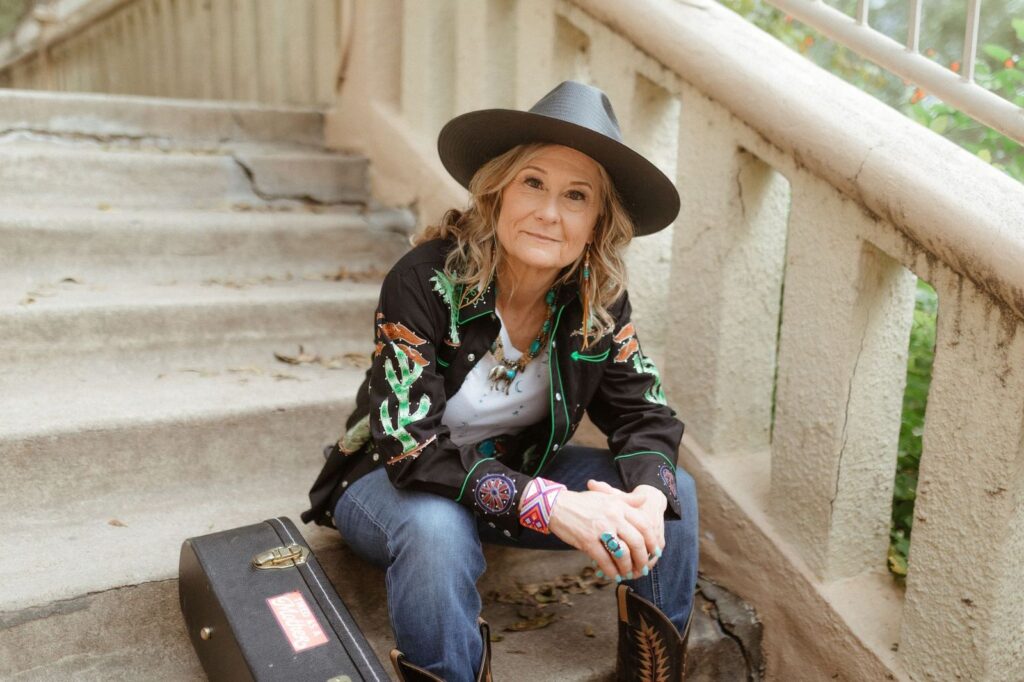
The album title… we’ve touched on it a little bit, but how did you choose it? What does it mean to you?
I wrote “Soft Place to Land,” the title track, as a personal song about coming out of a long season of being alone and wondering what it might feel like to be hopeful about loving someone again.
But the song is not naïve about hope. Relationships are complicated. They carry heartbreak, disappointment, unmet expectations, and all the tender places where people fail each other despite their best intentions. Still, even with all that complexity, I think most of us are looking for the same thing: somewhere we can find a soft place to land.
How do you feel you’ve changed as an artist/writer/creative person over the years?
Creativity and writing have always felt hard-wired in me. I’ve always loved the sounds of words, the way they play with each other, the way a line of poetry can mean nothing the first time you read it and then it comes back to you at the moment you need it. That part has been constant.
What has changed is my understanding of what the work is for. There was a time when I thought art was mostly about me. And of course, songwriting still does that. I write to understand what I’m feeling.
But as a working songwriter and live musician, I’ve come to understand that the song is not only about me. The real work is being vulnerable enough to tell the truth, but open enough for other people to find themselves inside it. I want listeners to feel their own lives through my songs. I’m always trying to get better at making room for that.
Are there any artists who inspired what you did on this album, be it lyrically, musically, or both?
When I was preparing to go to the studio, I was reading Lucinda Williams’ autobiography, where she talks about getting a reputation for being “difficult” in the studio, but pushing forward anyway. I admired that, but she’s Lucinda Williams, right? Eventually, what she was saying sunk in. If you want your music to be true, you have to stand by it, even if that has repercussions.
How does it feel to be releasing this album into the world for all to hear?
It feels like being at the top of an old wooden roller coaster and suddenly questioning every life choice that led me to strap myself in. There’s that moment of, “Oh no, what have I done?” But then the ride starts, and you remember that the point was never to stay safe at the platform.
Releasing music is vulnerable. These songs come from real places in me, and once they’re out in the world, they don’t belong only to me anymore. That’s scary, but it’s also the beautiful part. Great things only happen when you do the things you love even though they scare you a little.
What has been the most exciting thing to happen for you in the past year? What are you most looking forward to for the remainder of 2026?
The most exciting thing this past year has been getting my music out into the big ol’ world and feeling it begin to find its people. There’s nothing quite like realizing that a song you wrote alone can travel farther than you ever imagined and mean something to someone else.
For the remainder of 2026, I’m looking forward to continuing to grow as a musician and writer, playing more, writing more, and getting even more music out into the world. It’s always about the journey.