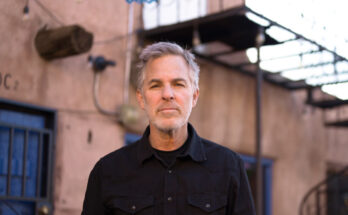
Not only have the members of The Disappearing Act known each other for many years, but they’ve built a shorthand, a “telepathy” with each other, as band member Salim Nourallah calls it. Joined by Bob Blumenfeld and John Dufilho, the trio of Texas-based musicians and songwriters has created a terrific collection of experimental indie pop on its latest album, Proof of Existence. Each band member brings individual strengths to the mix, creating something that is a feel-good listen from start to finish. Not only has the group proven its existence (to borrow a version of the album title) with this release, it has served up a reminder of continued excellence by a you-must-listen collective of amazing talents. We sat down with Salim and Bob recently to chat about the details of the new album.
AMPLIFY: Hi Salim and Bob. It’s great to talk to you again. The Disappearing Act has a terrific new album out in July called Proof of Existence. How did these songs come together and what broad strokes can you tell us about the collection?
SALIM NOURALLAH: Thank you for the props and the continued support. The new album is The Disappearing Act’s fourth. We’ve been making music now for over 15 years. This record came together over the course of about a year. It was a relatively painless process. The songs continue in the vein of semi-experimental pop music. I think anyone who likes David Bowie’s music would appreciate ours.
BOB BLUMENFELD: I don’t want to over-rely on the “Covid lockdown” cliché, but my recent burst of creativity emerged from the Covid lockdown. I already had a bank of unfinished songs, but during the 2020 slowdown, I had time to write some more songs. Also, John Dufilho became available to help me take the unfinished ideas and build them up into real demos. Those demo songs that John plays on and produced became most of the songs you hear onProof of Existence and our record before that, An Illusion. (And a few more albums by my other recording project, Welcome to the 21st!, too).
AMPLIFY: One of the songs on your new album, “Grow Up,” is really great and stood out to me. What can you tell us about that song? What inspired you to record this song?
BOB: I wrote and recorded the main parts to “Grow Up” during the full-blown Covid lockdown period in 2020, in an upstairs room at my house—probably sent there by my wife. However, I was able to wrangle my son, Ethan, home from college due to Covid to play lead guitar and tap out the beat on the drums. So it’s a nice memory and feels great to get a chance to have your child perform with you. As a bit of backstory, Ethan is himself of composer of indie, electronica, and avant garde instrumentals, and he has a serious “DIY mantra” where he writes all parts, plays all instruments, mixes, and produces everything himself. I have tried in the past – and since this Covid session – to get Ethan to play on a song or co-write something, but he usually politely demurs. Being stuck together at home back in the late spring of 2020 is an odd memory now, but on the positive side, it was a rare father-son musical effort, where my original guitar, Ethan’s lead, and Ethan’s drums, maybe, were cleaned up a bit by John in the mixing process and repurposed into what you hear in the final version of “Grow Up.”
SALIM: The lyrics for “Grow Up” were inspired by my ongoing thoughts on navigating life as an independent artist in a materialistic world. “Society” often seems to place external pressure on us to “grow up” and get it together on the finances front. I support a slightly more radical approach.
AMPLIFY: What was it like recording this album? What was the vibe overall, and how did this song, in particular, come together?
BOB: I already had my son, Ethan, playing lead guitar on this song, and I had an idea for a chorus of kids to add towards the end of the song. I rarely have vocal ideas, at least ones that make it into the song, but Salim and John were into it. That gave rise to John and Salim asking their daughters to chime in as the “kid chorus.” I missed the studio the day the girls came in to record – they did great. I think I was supposed to get them gift cards or something for the vocals but never did! So this became the first all-around, multi-generational The Disappearing Act song, which is nice.
AMPLIFY: What was the most difficult part of putting the album together? What was the easiest?SALIM: Nothing was difficult other than deciding which songs would make it onto the album. The easiest part was collaborating with my friends.
BOB: The hardest part of making The Disappearing Act albums is that Salim wants to have at least 10 songs per album, and it takes a lot more than 10 ideas to get 10 final songs. For me, the hardest part is digging deeper for more song ideas. The good part of that is I use the “leftovers” for my other recording project, which has lots of songs! My personal recording motto is: “No song left behind.” My recycled songs go to my other recording project – Welcome to the 21st! – or a big instrumental album I’ve been working on for 20 years and may or may not finish one day.
AMPLIFY: Do you think the fact that you’ve known each other for so long helps in the creative process?SALIM: One hundred percent. I’ve worked on countless records with Dufilho and Bob, and I have also been makingThe Disappearing Act music for almost two decades. We’ve got a seamless way of working together, and lots of telepathy is involved.
BOB: Absolutely. I have complete trust that John and Salim will take the song ideas and inject them with magic that takes them to the next level. They can do that to any song of mine, anytime. That is why I love collaborating on songs – yes, there are some misses, but when you hit, it’s still exhilarating.
AMPLIFY: What do you hope this album conveys to those who listen to it?
SALIM: A sense of humor, thoughtful meditations on somewhat non-traditional themes for “pop” music. We also have a fairly straightforward song that just encourages the listener to have a great day.
AMPLIFY: The album title… how did you choose it? What does it mean to you?
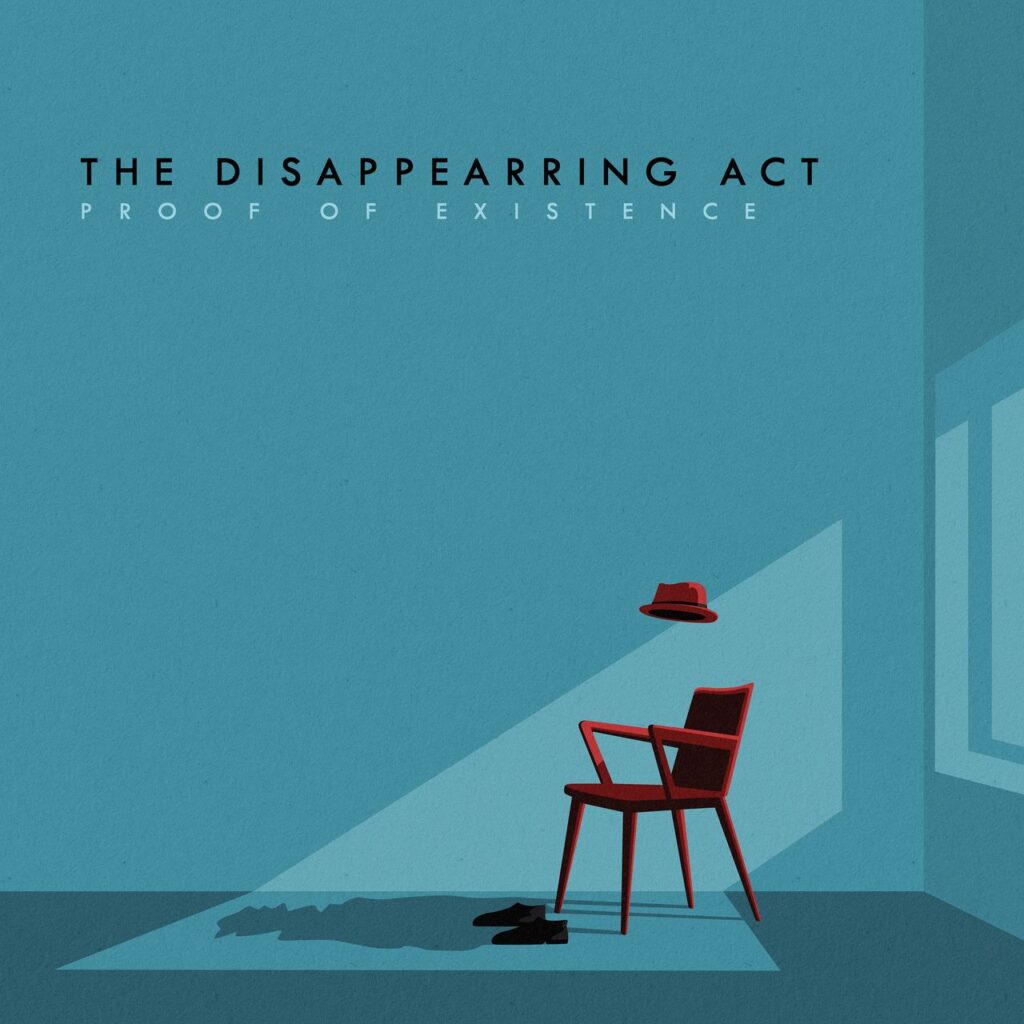
SALIM: It came from one of the songs, “Proof of my Existence.” It seemed like the perfect title for a group called The Disappearing Act. I also think it’s a bit funny coming on the heels of our last record, An Illusion.
AMPLIFY: Where do you tend to get your biggest inspiration from these days?
SALIM: I’m mainly inspired by things people in my life say. There’s so many interesting things people around me say. I just have to pay attention.
BOB: I still love to read – although my reading is now supplemented with audiobooks, podcasts and, yes, the dreaded bit of “doomscrolling” – and my reading sources have typically been the source of inspiration. Focusing a bit more on your question about “inspiration,” let me mention that I have always had an inner sense that original music ideas are communicated to us by unknown source that is not just within us, meaning it comes from somewhere else. I used to say that my song ideas came from angels or muses. The more I read, the more I’ve learned I am not alone in thinking that creative inspiration may emanate from a “source” outside of us. For instance, if you happened to see the Michael Jackson movie, in one scene, if I remember correctly, he was floating in the pool, soaking up the sun, andwhen asked by his family what he was doing, he said he was letting the sun give him inspiration for his next great song. If you understand what I am saying here, you get it. If not, don’t worry, you’re like most people out there.
AMPLIFY: Do you have any plans to tour or play any live shows?
SALIM: We’re currently open to offers to make that happen.